Optimizing Procurement With Purchase Orders: A Practical Guide for SMBs
Learn how to streamline your procurement cycle, avoid costly ordering mistakes, and implement approval workflows that keep your supply chain running smoothly.
Optimizing Procurement With Purchase Orders: A Practical Guide for SMBs
For small and medium-sized businesses, procurement is rarely just about placing orders. It is the backbone of your operations -- the process that determines whether you have the right products, at the right time, at the right cost. Yet many SMBs still manage procurement through scattered spreadsheets, email threads, and gut feelings. The result? Overstocked warehouses, unexpected stockouts, and strained supplier relationships.
This guide breaks down the procurement cycle, highlights the most common mistakes businesses make, and shows you how structured purchase order management can transform your supply chain.
Understanding the Procurement Cycle
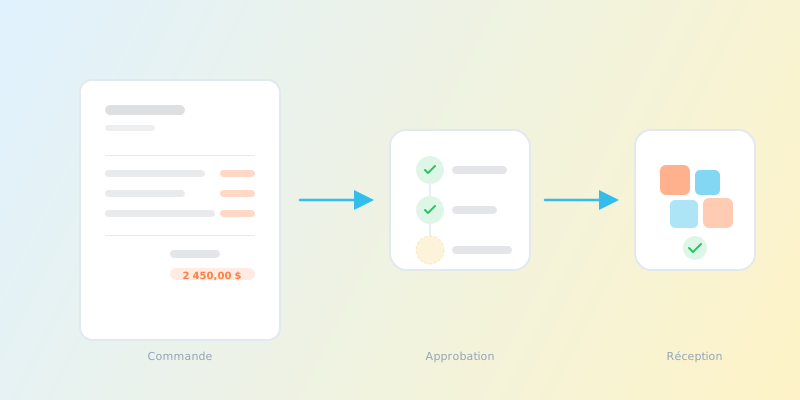
Every procurement process, no matter how simple or complex, follows the same fundamental arc: identify a need, place an order, and receive the goods. Getting each stage right is what separates businesses that thrive from those constantly firefighting.
Stage 1: Identifying the Need
Procurement starts long before you contact a supplier. It begins when stock levels drop, a new project requires materials, or seasonal demand shifts. The challenge for most SMBs is that this stage is reactive -- someone notices a shelf is empty, and only then does ordering begin.
A better approach is to set reorder points for key products -- predefined thresholds that trigger a purchase order or flag someone to review. This shifts procurement from crisis management to planned replenishment.
Stage 2: Creating and Approving the Order
Once a need is identified, a purchase order formalizes the request. A well-structured PO includes the supplier, the items and quantities needed, agreed pricing, expected delivery dates, and the destination branch or warehouse.
For businesses with multiple team members involved in purchasing, this is also where approval workflows come into play. More on that below.
Stage 3: Receiving and Reconciling
When goods arrive, the receiving process compares what was delivered against what was ordered. Partial shipments, damaged goods, and incorrect quantities are all common realities. Without a systematic way to track receptions against purchase orders, discrepancies slip through and inventory records drift out of sync with what is actually on your shelves.
Common Procurement Mistakes (and How to Avoid Them)
Overstocking: The Hidden Cash Drain
It is tempting to order in bulk to get volume discounts or to buffer against uncertainty. But overstocking ties up cash in inventory that sits on shelves, occupies valuable warehouse space, and -- for perishable or trend-sensitive products -- risks becoming obsolete before it sells.
Track your inventory turnover ratio for each product category. If certain items consistently sit for months before selling, reduce their reorder quantities. Use historical sales data rather than intuition to set order volumes.
Understocking: The Revenue Killer
On the opposite end, understocking leads to stockouts, which directly translate to lost sales and frustrated customers. Research consistently shows that a significant percentage of customers will switch to a competitor if their preferred product is unavailable.
Identify your top-selling products and monitor their stock levels more aggressively. Set higher safety stock levels for items with unpredictable demand or long supplier lead times.
Lack of Supplier Visibility
Many SMBs rely on a single supplier for critical products without tracking performance metrics like on-time delivery rates or order accuracy. When that supplier falters, there is no backup plan.
Maintain at least two qualified suppliers for your highest-volume products. Keep records of each supplier's delivery performance so you can make informed decisions about where to place future orders.
Manual, Error-Prone Processes
When purchase orders live in email inboxes, approval happens through hallway conversations, and receiving is tracked on paper, errors are inevitable. Duplicate orders, missed approvals, and unrecorded deliveries compound over time into significant inventory inaccuracies.
Start by digitizing just one step - move purchase order creation out of email and into a structured system. Even this single change eliminates duplicate orders and creates a searchable history.
The Power of Approval Workflows
For growing businesses, not every team member should have the authority to commit company funds without oversight. Approval workflows introduce structured checkpoints into the procurement process without creating bureaucratic bottlenecks.
How Approval Workflows Typically Function
A well-designed approval workflow routes purchase orders through one or more reviewers based on predefined criteria. For example:
- Amount-based thresholds: Orders under $500 can be auto-approved, orders between $500 and $5,000 need a manager's sign-off, and anything above $5,000 requires director-level approval.
- Category-based routing: Orders for production materials go to the operations manager, while office supplies go to the office administrator.
- Multi-step approvals: High-value orders pass through sequential approvers, ensuring multiple sets of eyes review the commitment.
Benefits Beyond Cost Control
Approval workflows are not just about preventing unauthorized spending. They create an audit trail that shows who approved what and when, which is invaluable during financial reviews. They also help catch errors early -- a second reviewer might notice an incorrect quantity or a better-priced alternative from a different supplier.
Avoiding Workflow Bottlenecks
The most common complaint about approval processes is that they slow things down. This happens when workflows are poorly designed -- too many steps, unavailable approvers, or no escalation path.
Keep approval chains short, designate backup approvers, and set time-based escalation rules so orders do not sit in a queue indefinitely.
Use amount-based thresholds to auto-approve low-value orders (e.g., under $500) while requiring review for larger commitments. This balances speed with oversight.
Automating Procurement With ISA
ISA was built to address exactly these procurement challenges. Its purchase order module covers the full cycle from creation through approval to reception, with features designed specifically for SMBs that need structure without complexity.
With ISA, you can create purchase orders linked to specific suppliers and branches, track ordered quantities against received quantities in real time, and manage partial receptions without losing visibility into what is still outstanding. The built-in approval workflow engine lets you design multi-step approval processes visually, with condition-based routing that adapts to the specifics of each order.
Every action is recorded in a complete audit trail, so you always know who created an order, who approved it, and who received the goods. Supplier information is centralized, making it easy to compare performance across vendors and maintain backup sourcing options.
For businesses managing multiple locations, ISA's branch-aware procurement ensures that each site can raise its own purchase orders while headquarters maintains oversight across the entire organization.
Getting Started: Three Steps to Better Procurement
- Audit your current process. Map out how purchase orders flow through your organization today. Identify where delays, errors, and blind spots occur.
- Define clear policies. Establish who can create orders, what requires approval, and how receiving should be documented. Write these down -- do not rely on tribal knowledge.
- Adopt the right tools. Move from spreadsheets and email to a purpose-built system that enforces your policies automatically and gives you visibility across the entire procurement cycle.
Procurement does not have to be a source of constant frustration. With the right process and the right tools, it becomes a competitive advantage -- ensuring you always have what you need, when you need it, at the price you expect.